
People
People – AI, Climate and Society Lab
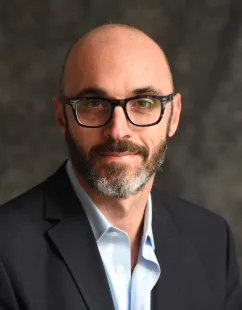
Marco Tedesco is a Lamont Research Professor at the Lamont-Doherty Earth Observatory of Columbia University and Adjunct Scientist at the NASA Goddard Institute for Space Studies (GISS). He is also affiliated with the Data Science Institute, he is Affiliated professor at Sant’Anna School of Economics in Pisa, Italy and has been the Resident Scientist at the Columbia Business School for the past two years. He is a fellow of the Explorers Club and a member of the New York City Panel on Climate Change, Equity Working Group. Dr. Tedesco received his Laurea degree and PhD in Italy, from the University of Naples and the Italian National Research Council. He then spent five years as a postdoc and research scientist at NASA Goddard Space Flight Center. He moved to CCNY in 2008 as an Assistant Professor where he was promoted to Associate Professor in 2012. During his time at CCNY, he founded and directed the Cryosphere Processes Laboratory and was a rotating Program Manage at the National Science Foundation between 2013 and 2015. In January 2016, he joined Columbia University. Dr. Tedesco’s research focuses on the dynamics of seasonal snowpack, ice sheet surface properties, high latitude fieldwork, dendrochronology, global climate change, its implications on the economy and real estate and climate justice. Dr. Tedesco led more than 10 expeditions to Greenland and to Antarctica, beside fieldwork in many other places, including Iceland, Northern US, Canada, Italian Alps and more. He is the editor of he book “Remote Sensing of the Cryosphere” published by Wiley in 2015 and he is the author of the book “The hidden llid of ice” originally published in 2018. the book has been translated in 7 languages and was selected by the Washington Post and by the National Geographic Traveler as one of the best 10 books of the year.
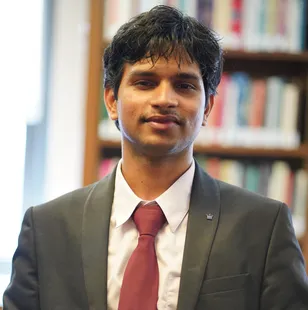
David Sathuluri is Founder and Co‑Director of the Laboratory on AI, Climate, and Society at Lamont‑Doherty Earth Observatory, Columbia University. An interdisciplinary researcher, columnist and social justice advocate. David also serves as Convenor of the Earth Network on AI, Climate, and Society, Earth Institute and as a Steering Committee member of the Environmental and Climate Justice Project (ECJaC) at the Columbia Climate School. He was engaged with the United Nations as a civil society expert and has been invited to deliver guest lectures and talks at Columbia GSAPP, NASA GISS, Wildlife ConservationSociety and Center for Sustainable Development (SDG’s Today).
His current research work focuses on AI governance and ethics, caste–climate justice nexus, critical theory, community participation, politics, and public policy.His writing and research have appeared in a wide range of journals, media and blogs, including the Los Angeles Times, Richmond-Times Dispatch, The Hindu, The Diplomat, Council on Foreign Relations, The Wire, State of the Planet, Dialogue Earth, Climate Home News,The Polis Project, Tech Policy Press, Down to Earth, Columbia Daily Spectator, and the Oxford University Climate Society, among others. He is a recipient of the Tamer Institute for Social Enterprise and Climate Change, Columbia Business School 2025 Startup Works Award and is a Co-Founder of Shared Return Collaborative Inc, a nonprofit dedicated to supporting justice-impacted individuals.

Pavi Selvakumar is an environmental social scientist interested in how communities navigate sustainability, environmental justice, and resilience in the face of today’s climate challenges. She earned her Ph.D. in Environmental Science from Oklahoma State University. Her dissertation investigated how institutional structures, campus culture, state politics, and leadership priorities influence the development of sustainability initiatives at U.S. land-grant universities. During her Ph.D., she also worked as a Graduate Research Assistant with the Social Dynamics team of the NSF EPSCoR S3OK project, collaborating with an interdisciplinary group of researchers to address wicked environmental problems facing the state.Pavi holds a bachelor’s degree in Information Technology from India and a master’s degree in Environmental Assessment and Management from the United Kingdom. Her interdisciplinary background drives a research approach that combines technical fluency with a strong foundation in environmental policy and social inquiry. As a postdoctoral research scientist at the Columbia Climate School, she is exploring how artificial intelligence and climate justice can be integrated to support equitable resilience planning in frontline communities.
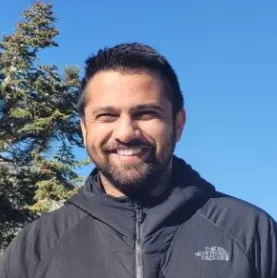
Racheet Matai is a Postdoctoral Research Scientist at Columbia University's Lamont-Doherty Earth Observatory. His research focuses on integrating artificial intelligence with physically based numerical models to improve the efficiency, interpretability, and predictive capability of complex environmental simulations.
His current work spans ice-sheet dynamics, basal friction parameterization, and surrogate modeling for cryosphere applications. He has developed interpretable machine learning emulators for regional climate models and is investigating new data-driven parameterizations for ice-sheet sliding that can improve large-scale ice-sheet simulations while remaining grounded in physical principles.
Prior to his work in the cryosphere, Dr. Matai conducted research in computational fluid dynamics, turbulence modeling, and scientific machine learning, developing physics-guided surrogate models for complex fluid flows. His broader research interests lie at the intersection of artificial intelligence, scientific computing, computational physics, and Earth system science, with an emphasis on creating machine learning methods that complement rather than replace physics-based models.
His long-term goal is to develop next-generation AI methodologies that accelerate scientific discovery while maintaining physical consistency, enabling more efficient modeling across a wide range of geophysical and engineering systems.

Vishal Manve is an interdisciplinary researcher and climate-policy professional whose work focuses on artificial intelligence, energy systems, climate justice, and the governance of emerging technologies. He currently serves as Operations associate at Columbia Center on Sustainable Investment. He contributes to the Laboratory on AI, Climate and Society, where his work supports research development, interdisciplinary collaboration, public scholarship, and the translation of technical findings into policy-relevant analysis.His research interests include responsible AI governance, the energy and environmental impacts of artificial intelligence, climate-amplified energy insecurity, data-center infrastructure, and the distributional consequences of digital and energy transitions. His broader work examines how technological systems interact with public institutions, vulnerable communities, and questions of equity, accountability, and sustainable development. Vishal has previously worked with the United Nations, the UNFCCC Global Innovation Hub, the Columbia Climate School, the Sabin Center for Climate Change Law, and the Growald Climate Fund. Before entering climate and technology research, he worked as a journalist covering economics, energy, politics, and international affairs. His reporting and analysis have appeared in AFP, BBC, The Diplomat, Fair Observer, Yahoo News, and ORF America, among other publications. He holds a Master of Arts in Climate and Society from Columbia University and a Master of Arts in Law and Diplomacy from The Fletcher School at Tufts University. His work is grounded in an interdisciplinary approach that combines policy analysis, research communication, international affairs, and critical inquiry into the social implications of artificial intelligence.

Valentina S. Rodriguez is a researcher and software developer with interests in artificial intelligence, machine learning, and data-intensive systems. She recently graduated from Columbia University with a Dual B.A. in Information Science and a minor in Mathematical Probability. Her work spans AI research, large-scale data infrastructure, and applied machine learning, with experience at the United Nations Development Coordination Office, Columbia's NLP research community, and quantitative finance projects. In the AI,Climate and Society lab, she contributes to explainable AI models for energy insecurity prediction, focusing on the intersection of machine learning, environmental data, and public impact. She is particularly interested in building AI systems that are both technically robust and useful for real-world decision-making. Outside of research, she enjoys competitive programming, teaching computer science, and ballet.

Alissa Krochenski is an MSc candidate in Climate at Columbia Climate School, specializing in climate systems, sustainable finance, and data analytics. Her work examines how physical climate risk — particularly water and resource stress translates into financial, institutional, and community-level impacts. She currently serves as a multidisciplinary intern at True Elements, a water intelligence company, working at the intersection of climate risk, water resources, and food and agricultural supply chain resilience. She contributes to product development initiatives that integrate hydrologic and environmental data into decision-support tools, helping stakeholders protect assets, allocate capital, and strengthen long-term resilience. Her work bridges climate science, data analytics, and finance in applied, real-world contexts. Alissa’s background includes professional experience in hydrogeology, groundwater systems, environmental consulting, regulatory compliance, and institutional sustainability leadership across Asia and the United States. Her international experience informs a contextual approach to resilience planning, recognizing that effective climate solutions must account for governance structures, cultural dynamics, and community priorities. She’s especially interested in how artificial intelligence, climate systems modeling, and responsible governance frameworks can support equitable and adaptive climate resilience.

Manya Srivastava is a Computer Science student at Columbia University with a keen interest in energy systems, geospatial analytics, and data science. As a Researcher for the AI, Climate and Society Lab, she integrates and analyzes climate, energy, housing, and socioeconomic datasets to investigate climate-amplified energy insecurity, developing geospatial models that support data-driven resilience planning. As a NASA Research Intern at the BCC Geospatial Center, Manya develops open-source geospatial machine learning tools that combine satellite imagery, computer vision, and large language models to automate remote sensing workflows. Her work includes building scalable image classification pipelines and deep learning models for urban land use analysis using multispectral imagery. Outside of research, Manya leads a multidisciplinary team developing solar deployment proposals for the U.S. Department of Energy's Solar District Cup. She is passionate about applying artificial intelligence, geospatial analysis, and data-driven modeling to accelerate the transition toward more resilient and sustainable energy systems.
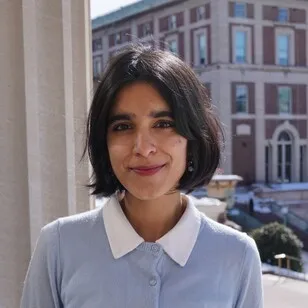
Sita Vemuri is an undergraduate researcher studying Computer Science at Columbia University. At the Laboratory for AI, Climate and Society, she conducts data analysis and visualization to understand climate-amplified energy insecurity. Sita is passionate about using artificial intelligence and visual storytelling to address social issues.
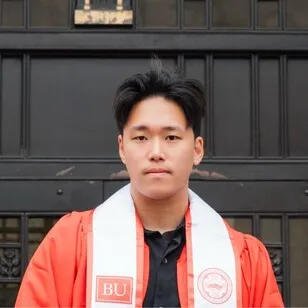
Xiling Wang is a Master’s student in Biostatistics at Columbia University. He earned his bachelor’s degree in Physics and Computer Science from Boston University, where he developed a foundation in quantitative modeling, computation, and data analysis. Before joining Columbia, he worked as a Data Scientist at Picarro China, developing data pipelines, analytical workflows, and visualization tools for environmental monitoring and greenhouse gas measurement applications. As a research assistant on the Energy Insecurity Project, he contributes to the integration and analysis of climate, energy, housing, and socioeconomic datasets to investigate climate-amplified energy insecurity. His research interests include explainable AI, machine learning, geospatial analytics, and data-driven approaches to climate resilience.
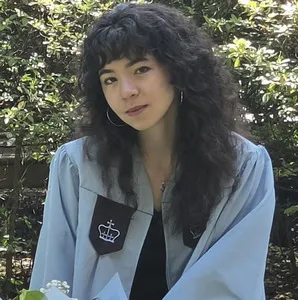
Anika Strite is a researcher with interests in computation, aesthetics, critical theory and philosophy, and media studies. She recently graduated from Barnard College with a BA in English (creative writing), a BA in French, and a minor in history. Her English senior thesis, “Noise as an Aesthetic Approach to the Crisis of Form in the Informatic Age,” explored the concept of noise in contemporary visual arts as a situated response to the AI assemblage and its effects on human experience, the aesthetic encounter, and artistic responsibilities. She is passionate about expanding AI literacy and exploring the potential of AI to generate novel forms of expression and representation that serve people over capital, particularly in the imagining of justice-oriented collective AI-climate futures.